It has been three months since you left the world behind of your own volition. It has been three months since you decided to abandon all forms of optimism and the people who have spent their entire lives loving and caring about you. It has been three months since the pain and shame of your existence became a burden too heavy to bear. As selfish as it is, I will never be the same person again. I accepted that the day I got the call that they found you. The question that now weighs heavily on my shoulders is: Will I ever be a person again?
That blazing June afternoon, I lost a piece of myself. I believe a person can take one of two paths in the face of an undeniably life-altering event that causes one to lose a piece of themself. The first, and far more destructive, is to let the lost piece define you. Let it take over your soul; let the crux of your existence dwindle and vanish; let the worldly activities that you pursue consume you. Not only will you forget who you were, but you will forget who you are. You will fill the void with self-destruction, empty encounters with practical strangers, and alienation from what and who you love. Until one day, the illusion breaks, and you are forced to confront the reality of your situation; you have become an empty, hollow shell of a human, an actress, trying to appease those around you, no matter what. You have lost who you were, any semblance of who you are and what you want to be. Your perception of self will come to rely solely on what those around you tell you; you’re half a person. The people you meet during this time will only know this stunted version of you, and eventually, they will notice and pursue a surface-level relationship; why would they want to get too close? The people you knew before this time will question if they ever truly knew you in the first place. Grief certainly has no timeline, but it is naive to assume that people will put up with a broken version of the person they once knew forever; there is an expiration date.
The other, and arguably “better” path to take is radical acceptance. One must accept that they will never be whole in the same manner they once were. One must confront the brokenness, what it evokes within them, and who they are going to be. There is a broken piece inside you, but you must discover how, and if, you want to fix it. This method is reminiscent of kintsugi, a traditional Japanese art practice, in which broken pottery is mended with gold and silver lacquer. Something is rebuilt, but with a recognition that the visible cracks are what make it what it is.
I have fallen victim to the first path. I have allowed grief to consume me, oddly, by adopting a hedonistic worldview that masks the true existential nihilism that I hold within me. But nothing worked; nothing I did filled the void, but only provided me with momentary pleasure, followed by a confrontation with reality. More times than I would like to admit, over the past few months, I have stopped, looked in the mirror, and audibly asked myself, “What are you doing?” This was a fair question to levy, as my actions, or more so the path I was headed on, were so contrary to who I was, or at least who I thought I was.
Grief, in this manner, is not pretty; it is not to be romanticized, nor should anyone have to experience it. There are no life lessons to be learned, or fundamental character building. It is not a test of strength, either of the self, or of the relationships one has built. But you know that just as well as I do. If these past three months have taught me anything, it is that I am a selfish person; a person so bogged down in her own head that I have disregarded how my suffering impacts those around me. While grief, naturally, causes its own problems, I have found that it also amplifies pre-existing internal struggles. My lack of sense of self, aversion to vulnerability, and fear of abandonment were not caused by your death, but in mourning, I fear they have become much more harmful, and much more obvious. The combination of an imperfect self and a tragic circumstance can only lead to a disorganized outcome, wherein I am completely lost. But people tread lightly regarding these observations, with the recognition that I am going through something. It seems quite cruel to tear down the girl whose Dad took his own life. However, I welcome it, with the acknowledgment that it will likely deteriorate my fragile sense of who I am.
Tomorrow, I turn 21. My first birthday in a world that you are no longer in. My first birthday that you will not celebrate. My first birthday in a world without the two people who brought me into it. I will live the rest of my life without you; with guilt, sadness, anger, and shame, and nothing will change that. I am still early into grief; I am unsure how to handle these conflicting emotions, while ensuring they do not become primary to my existence. But I am at a crossroads; my mind wants to take everything that has happened in the aftermath of your death and throw it away. I want to forget every conversation, every drink, every inadvisable decision that I have made; everything. I want to return to who I was before; independent, self-respecting, and ambitious. I want to run away from the people who have only seen me at my lowest; I want to restart, and do grief right this time. But my soul tells me that I simply must become reacquainted with myself, and try to understand the person I have become. I must embrace the new that has come into my life, rather than cowering and writing it off as a by-product of grief. I must accept that my vulnerability is intertwined with the fabric of my soul, and allow it to reveal itself to those who stick around.
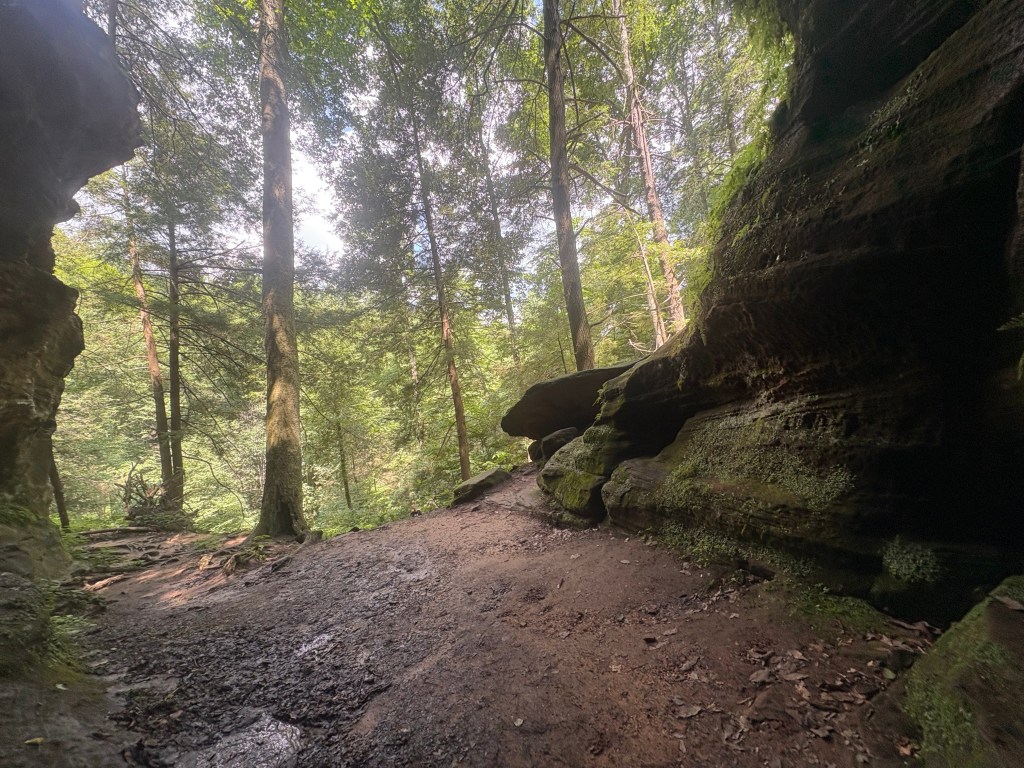
I do not believe in an omniscient being or an afterlife. I cannot guarantee that you are in heaven, reincarnated, or something in between. All I know is that you are gone, and there is not a thing on Earth that can bring you back. As naive as it sounds, I find nature religious in a way. I think we are all connected to the Earth in some way, and that when we die, we return to Her. However ridiculous it sounds, sometimes when I am on a walk, I think I can feel your presence, and then I feel less alone.
I love you, Dad, and I hope, more than anything, that you have found peace and satisfaction wherever you may be. I understand you, I forgive you, and I will, one day, become the amazing person you always wanted me to be.
Love,
m.


Leave a Reply